Bitcoin and the Mystery of Satoshi Nakamoto (2026 Guide)

Not financial advice — educational only.
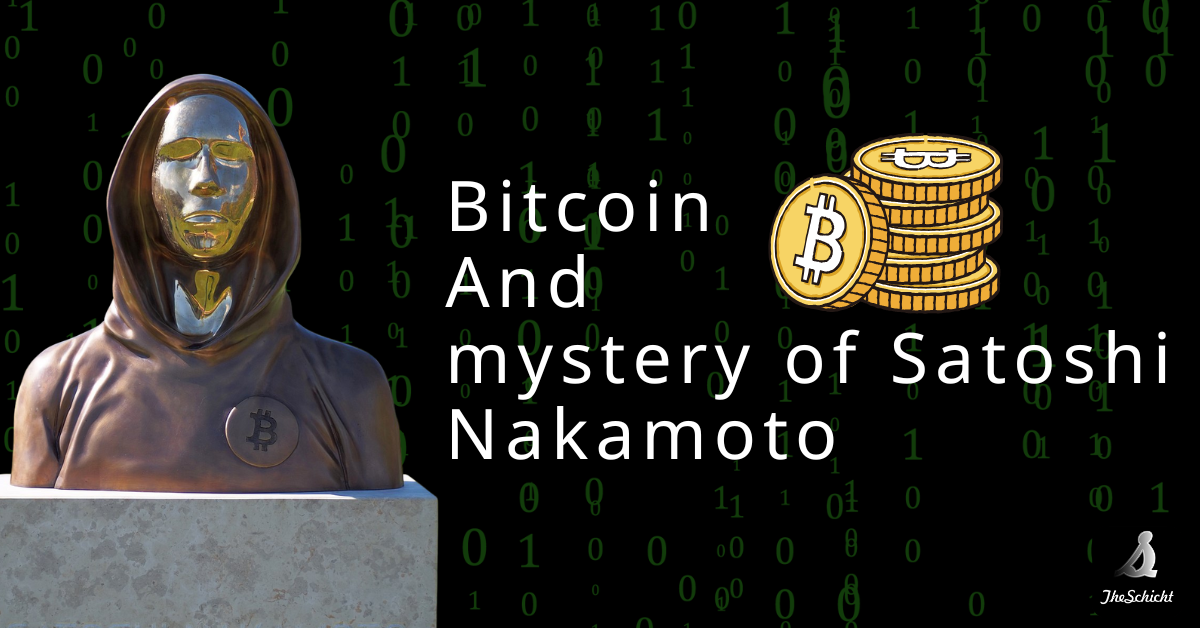
More than fifteen years after Bitcoin's launch, the single most valuable digital asset on Earth still has no known creator. "Satoshi Nakamoto" published a nine-page whitepaper, wrote the first software, mined the earliest blocks, exchanged emails with a handful of early developers — and then, in December 2010, went silent and never came back. The wallets believed to belong to Satoshi hold roughly 1.1 million bitcoin and have never moved. That combination of world-changing influence and total anonymity is why the mystery still refuses to die in 2026.
This is a guide to what we actually know, what remains speculation, and why the not-knowing turned out to be one of Bitcoin's most important features rather than a loose end.
Key takeaways
- Satoshi Nakamoto is the pseudonym behind Bitcoin's 2008 whitepaper and 2009 launch; the real identity has never been confirmed.
- Satoshi-linked wallets hold an estimated ~1.1 million BTC — around 5–6% of all coins that will ever exist — and have stayed dormant for over a decade.
- Leading candidates over the years include Hal Finney, Nick Szabo, Adam Back, and Peter Todd; all denials or non-confirmations stand.
- The anonymity is not a gap in the story — it is central to Bitcoin's claim to be leaderless and censorship-resistant.
The birth of Bitcoin
On 31 October 2008, in the depths of the global financial crisis, someone using the name Satoshi Nakamoto emailed a cryptography mailing list a paper titled Bitcoin: A Peer-to-Peer Electronic Cash System. It proposed digital money that could be sent directly between people with no bank in the middle, solving the "double-spending" problem through a shared, tamper-evident ledger — what we now call the blockchain. If you want the underlying mechanics, our explainer on how blockchain works unpacks it in plain language.
On 3 January 2009, Satoshi mined the first block, the Genesis Block. Encoded inside it was a line of text: "The Times 03/Jan/2009 Chancellor on brink of second bailout for banks." It was both a timestamp and a mission statement — a jab at the very banking system Bitcoin was designed to route around. For the deeper "why," see our piece on the dollar and the rise of Bitcoin.
The disappearance
Between 2009 and late 2010, Satoshi was an active, generous collaborator — patching code, answering questions on forums, and coordinating early development. Then the tone shifted. Satoshi handed control of the code repository and network alert key to developer Gavin Andresen, wrote that they had "moved on to other things," and stopped posting. No farewell, no reveal, no attempt to cash in. That deliberate exit is arguably the most consequential decision in Bitcoin's history.
The leading theories in 2026
Hal Finney
A brilliant cryptographer and cypherpunk, Finney received the very first Bitcoin transaction from Satoshi and lived, by coincidence, near a man named Dorian Satoshi Nakamoto. Finney denied being Satoshi before his death in 2014, but he remains many researchers' sentimental favorite because of his skill and proximity to the project.
Nick Szabo
Szabo designed "bit gold," a conceptual precursor to Bitcoin, and linguistic analyses have repeatedly flagged similarities between his writing and Satoshi's. He has consistently denied it.
Adam Back
Back invented Hashcash, the proof-of-work system Bitcoin builds on, and was one of the first two people Satoshi ever emailed. In April 2026, a New York Times investigation reportedly named Back as its leading candidate — a claim he, like the others, has not endorsed.
Peter Todd
The 2024 HBO documentary Money Electric: The Bitcoin Mystery argued that Bitcoin Core developer Peter Todd is Satoshi. Todd flatly rejected the theory, calling it "ludicrous" and describing it as coincidence-based conspiracy thinking. The film generated headlines but no proof.
The honest summary: after more than a decade of amateur sleuthing, professional journalism, and stylometric analysis, no candidate has ever produced the one piece of evidence that would settle it — a cryptographic signature from Satoshi's known keys.
Why the mystery genuinely matters
It protects decentralization
Bitcoin's core pitch is that no single person or institution controls it. A known, living founder would be a target — for lawsuits, subpoenas, coercion, and pressure to "fix" the protocol. Satoshi's absence means there is no throne to seize and no leader to lean on.
The dormant fortune is a systemic question
Those untouched ~1.1 million coins are worth tens of billions of dollars even at 2026's reduced prices. If they ever moved, it could rattle markets and reopen every debate about who Satoshi is. Their continued stillness is, in a strange way, a form of reassurance — and a standing reminder of how much value one anonymous person walked away from.
It is the ultimate proof of principle
Satoshi built something worth hundreds of billions and claimed neither credit nor riches. That self-effacement is the ideological heart of Bitcoin: a system that works because of math and incentives, not because you trust a founder.
The legacy, whoever they are
Whether Satoshi was one person or a small group, the fingerprints are everywhere. Bitcoin spawned thousands of cryptocurrencies, an entire ETF industry, corporate treasury strategies, and even a US Strategic Bitcoin Reserve. It gave people in unstable economies a way to hold value outside a failing local currency. Not bad for a project whose creator we still cannot name.
If Satoshi's story has piqued your curiosity about the technology rather than the mystery, start with what cryptocurrency is, and if you are thinking about participating, our guide on how to invest in crypto in 2026 is the practical next step.
Frequently asked questions
Is Satoshi Nakamoto a real person?
"Satoshi Nakamoto" is a pseudonym. It may represent a single individual or a small group. Despite many candidates being proposed, no one has ever been conclusively proven to be Satoshi.
How much bitcoin does Satoshi own?
Blockchain researchers estimate Satoshi-linked wallets hold roughly 1.1 million BTC — about 5–6% of the eventual 21 million supply. These coins have never been spent.
Why did Satoshi disappear?
Satoshi never explained fully, saying only that they had "moved on to other things." The likeliest interpretations are protecting personal privacy and removing themselves so Bitcoin could not depend on a central figure.
Could Satoshi's identity ever be proven?
Definitively, only by moving coins from a known Satoshi wallet or signing a message with the original private keys. Journalistic investigations and text analysis can build a case, but they cannot deliver that cryptographic proof.
What happens to Bitcoin if Satoshi's coins move?
It would be a major market and psychological event. Sudden selling of that size could pressure prices, and any movement would trigger intense speculation about who controls the keys.
Does it matter that we do not know who Satoshi is?
For Bitcoin's design, the anonymity is a feature. A leaderless protocol is harder to censor, capture, or coerce — which is exactly what its creator seems to have intended.